


Draft of Law on Amendments to the Minerals Law
On July 2, 2026, the State Great Khural held the final discussion of the draft Law on Amendments to the Minerals Law, and the draft is expected to be finally adopted during the 2026 autumn session of the Parliament. The main changes include:
- Added protective regulations directly prohibiting unlawful interference in license holder operations, damage to equipment, or disruption of transportation.
- Mineral processing/beneficiation activities are regulated under a separate special permit (license) for the first time.
- Introduced a new concept of "Critical Minerals."
- Companies can now obtain new contract rights to perform basic geological surveys and prospecting across areas ranging from 35,000 to 150,000 hectares without going through a competitive bidding process.
- Newly codified a special permit for Mine Surveying (Mine Surveyors).
- Established detailed requirements for mine closure and reclamation financial assurances.
- Annual fees and collateral/escrow fees for exploration and mining licenses increase significantly and will automatically be indexed to the consumer price index annually.
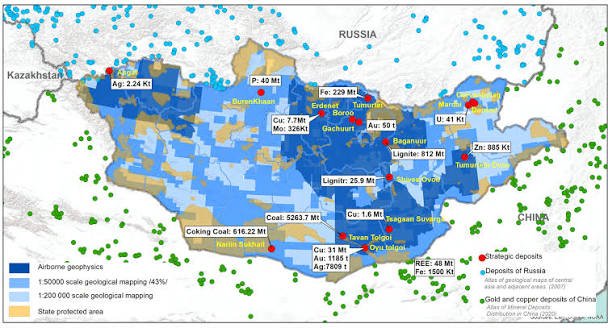
The core of the reform is that mineral processing activities have been placed under separate licensing regulation for the first time, and the concept of "critical minerals" has been introduced.
The Law also creates a new contractual mechanism for performing basic geological surveys and prospecting using private funds, allowing companies to conduct preliminary studies on areas of 35,000 to 150,000 hectares without waiting for competitive bidding announcements. Furthermore, it contains numerous new provisions, such as detailed schedules for mine closure and reclamation financial assurances, a new special permit for mine surveying, and provisions prohibiting illegal interference with license holders' operations.
Annual fees for exploration and mining licenses are significantly raised and will be automatically indexed annually based on the consumer price index (CPI).
There are three major structural changes in the Minerals Law:
- Separate regulation for processing/beneficiation activities.
- Introduction of a contractual mechanism for geological research funded by private capital.
- Restructuring of fee and payment systems.
Key Specific Regulations:
"Mineral Processing Activity" – A New Type of Special Permit
Mineral processing (beneficiation) activity is now governed under a separate special permit framework:
- To obtain the permit: In addition to requirements specified in Article 7.1 of the Minerals Law, applicants must submit technological test results, a land use certificate, conclusions of the Mineral Resources Professional Council, an Environmental Impact Assessment (EIA), and a certified reliable source of water supply.
- Issuance term: 5 years, with option for renewal.
- Transferability: Special permits are transferable, but proof of paid taxes is required.
- Restrictions: Processing or selling minerals of unidentified origin or types not specified in the permit is strictly prohibited.
Codification of the Mine Surveying Special Permit
- Requirements: Minimum bachelor's degree, at least 8 years of relevant experience, and no prior criminal record.
- Issuance term: 3 years, renewable.
- Functions: Functions as an independent, third-party assessment. The surveyor may receive fees from the project developer, but the surveyor assumes sole legal liability for the accuracy and truthfulness of the conclusions.
Agreement to Perform Basic Geological Surveys and Prospecting
Legal entities specified in Article 7.1 of this Law may submit a request to the state administrative agency in charge of geology to enter into an agreement to perform basic geological research and prospecting on land areas that: are not covered by existing special permits; do not overlap entirely or partially with areas restricted or prohibited for mineral prospecting, exploration, and mining; are not included in competitive bidding areas; or were announced for competitive bidding twice but received no bids.
- Stage 1 — Agreement:
- Applies to unpermitted, unrestricted, non-bidding areas (or areas where 2 tenders yielded no applicants).
- Area size: 35,000 – 150,000 hectares.
- Decision timeframe: Requests will be decided within 20 days, and agreements will be concluded for up to 2 years.
- Key prohibitions: Mining and selling minerals are prohibited; transferring or pledging the rights under the agreement is prohibited.
- No special permits shall be issued to third parties during this period.
Stage 2 — Exploration Special Permit:
- If the contractor fulfills its obligations under the agreement, it obtains the right to request an exploration special permit for a selected portion of the area.
- The permit area must not exceed 20 percent of the total agreement area.
- Permit duration: 2 years, with a one-time extension option for an additional 2 years.
Mine Closure and Reclamation Financial Assurances
- Obligation to develop a mine closure plan prior to opening a mine and update/refine it every 3 to 5 years.
- Financial assurances must be deposited according to a schedule into a special state account or through international banking/financial instruments—annual percentage rates based on mine operational lifespan are established in a matrix/table.
- Core principle: Full amount must be deposited within 2/3 of the total operational lifespan; if the mine operates for up to 3 years, 100 percent must be deposited in the first year.
Provisions Protecting License Holders' Rights
It is strictly prohibited to unlawfully interfere with geology, exploration, mining, or processing activities; damage equipment; intentionally disrupt transportation or production; block mine exits/entrances; or deliberately cut off power or water supplies.
Payment Structure Changes
- Annual exploration fees modified: Year 1 is 3.5 units/ha, rising up to 35 units/ha in Years 4–6.
- Mining special permit fees: Coal/limestone at 12 units/ha; other minerals at 48 units/ha.
- Annual collateral/escrow fees for special permits: Increased progressively from 16 units up to 70 units.
- Unit definition: 1 Unit = 1,000 MNT, automatically indexed each year based on the prior year's growth rate of the Consumer Price Index (CPI).
Transparency and Local Participation
- License holders are now mandated to make their annual operational information transparent to the public.
- Specifies 5 distinct forms of participation for citizens and NGOs (participation in policy development, joint research, technology/innovation implementation, right to information, and right to report violations).